
If you’ve ever Googled your symptoms and ended up convinced something serious was wrong, you’re not alone. Millions of people now turn to AI symptom checkers before visiting a GP or urgent care.
They’re fast.
They’re convenient.
And they can feel reassuring when you know how to use them properly.
This guide explains how these tools work, what affects their accuracy, and when you should still speak to a doctor.
What Makes an AI Tool Reliable in the First Place?

A symptom checker is only as trustworthy as the data and design behind it.
Medical-quality foundations
Studies have found that reliable tools use clinical sources, validated datasets, and structured medical logic.
Transparency
Trustworthy tools explain how they work and what data they rely on.
Safety-first design
Good symptom checkers avoid guessing or diagnosing — they guide, not conclude.
Continuous updates
Medical knowledge evolves, and so should the AI.
Human oversight
Clinician involvement adds another layer of safety.
If you want to understand how high-quality AI symptom checkers work under the hood, we’ve got a clear breakdown on exactly how AI symptom checkers work.
How AI Analyzes Symptoms to Generate Suggestions
AI symptom checkers use more than keyword matching — they use structured reasoning.
They interpret natural language
NLP helps AI understand everyday phrasing, even if it’s imperfect.
They ask follow-up questions
This builds context Google doesn’t have.
They look for clinical patterns
AI compares what you report with known symptom combinations.
They evaluate likelihoods
The AI weighs common vs less common explanations.
They use structured flows
A series of questions about duration, severity, risk factors, lifestyle, and medical history improves accuracy.
Key Factors That Influence Accuracy
Here’s what matters most for reliable suggestions:
1. The tool’s underlying data
Better medical data = better output.
2. The type of model used
Rule-based systems tend to be rigid.
Machine-learning models adapt better.
Hybrid systems offer balance.
3. The quality of user input
The clearer your description, the clearer the result.
4. Personalisation capability
Your age, medical history, and risk factors dramatically change symptom meaning.
5. Consumer vs clinical-grade tools
Some platforms tested in studies perform much better than others — and results vary significantly.
If you’re curious, we’ve got another guide on how AI compares to Googling symptoms. here’s an easy explainer.
Why These Tools Are Designed for Guidance, Not Diagnosis
This is the most important thing to remember:
AI symptom checkers cannot diagnose you — and they shouldn’t.
No physical examination
AI can’t see your rash, test your blood, or hear your breathing.
No diagnostic authority
AI legally cannot diagnose medical conditions.
Designed for triage
These tools focus on:
- “What’s possible?”
- “What’s likely?”
- “What should you do next?”
not
- “This is your diagnosis.”
Supported by research
Tests of symptom checkers show they’re more reliable for triage (urgency advice) than diagnosis.
How to Use AI Safely as Part of Your Health Decisions
Here’s how to get the best results:
1. Describe your symptoms clearly
The AI can only work with what you tell it.
2. Use it as a starting point
Let it give you direction — not a final answer.
3. Watch for red flags
Seek urgent help for:
- chest pain
- difficulty breathing
- sudden weakness
- severe abdominal pain
- high fever (especially in children)
- rapidly worsening symptoms
4. Follow up when recommended
If the AI suggests professional care, don’t ignore it.
5. Combine AI with trustworthy medical sources
Use AI → check reliable info → speak to a doctor if needed.
Air Doctor makes the follow-up step easy by helping you find vetted, trusted doctors when the AI recommends care.
Why Air Doctor’s AI Symptom Checker Is Easy to Trust
Most symptom checkers give basic suggestions — but Air Doctor’s tool is designed to offer clearer, safer, and more personalised guidance from the moment you start using it.
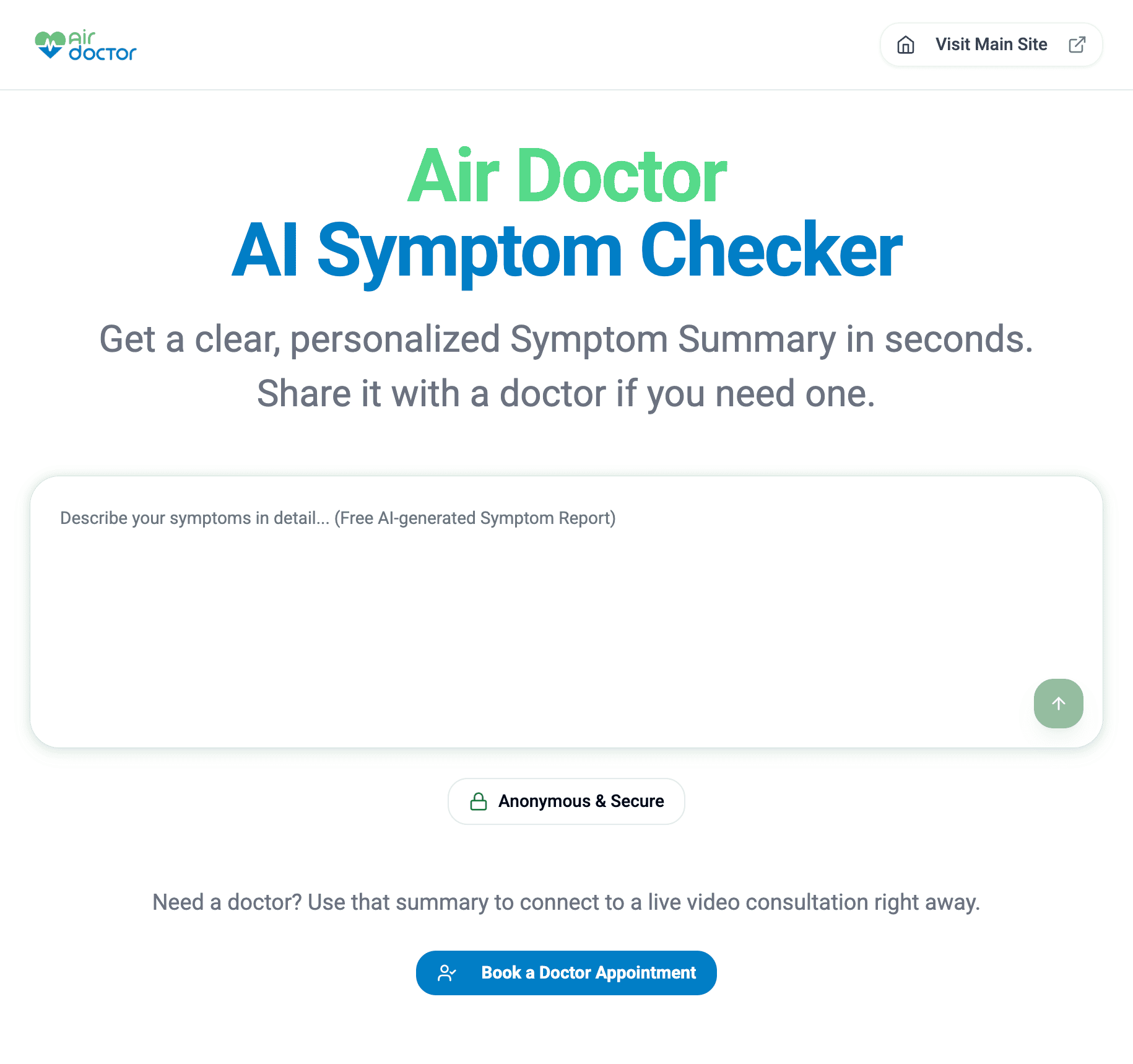
Here’s what makes it stand out:
It uses a structured medical flow, not guesswork

Instead of relying on vague chat prompts, the Air Doctor AI walks you through an 8-step flow covering:
- your main symptom
- medical history
- duration and severity
- lifestyle factors
- daily impact
This helps the AI understand your situation far more accurately than a simple Google search or an unstructured chatbot.
It prioritises safety and responsible guidance
The AI is built to avoid overconfident diagnoses.
Instead, it gives you:
- clear possible explanations
- a simple urgency assessment
- practical next steps (self-care, routine care, or immediate attention)
It’s guidance — not a diagnosis — and that’s exactly what reliable AI should provide.
Ideal for travellers, expats, and anyone who needs quick clarity
Whether you’re abroad, between GP appointments, caring for kids, or just feeling unsure, the tool gives you instant, judgment-free guidance — anytime, anywhere.
Backed by a global network of vetted doctors
This is where Air Doctor is different:
If the AI thinks you should see a doctor, you can connect instantly to a real medical professional who speaks your language — online or in person.
Most symptom checkers stop at “Here’s what it might be.”
Air Doctor goes further by offering actual medical support when you need it.

Private, secure, and designed to protect your data
Your information stays confidential.
Air Doctor never sells symptom data and uses secure systems to keep your health details safe.
In Short
AI symptom checkers are genuinely helpful when you use them the right way.
They offer fast, private guidance — especially when you’re worried, far from home, or waiting for a GP.
They’re not a replacement for doctors.
But they’re a smart first step toward clarity.
About Air Doctor
With the Air Doctor app in your pocket, you can access medical care and receive expert medical guidance anywhere you travel.
Air Doctor offers a wide range of benefits, including:
- A global network of multi-lingual doctors and specialists
- Choice of clinic, at-home (hotel), and video consultations
- Healthcare access in 90 countries
- 24/7 multi-lingual support
- Transparent pricing and reviews
- Most common medical specialties, including cardiologists
FAQs
Are symptom checkers safe to use?
Yes — as long as you’re using a reputable tool. Good symptom checkers are designed with safety in mind: they avoid making diagnoses, they ask follow-up questions to build context, and they guide you toward appropriate next steps. They’re best used as a first step, not the final answer.
Can symptom checkers diagnose rare diseases?
Not reliably. Rare conditions usually require specialist tests, physical exams, or detailed medical history that AI can’t access. Symptom checkers prioritise common and clinically relevant possibilities, which is much safer than trying to match unusual symptoms to rare disorders.
Can AI symptom checkers replace a doctor?
No. They can help you understand what your symptoms might mean and whether you should seek care — but they can’t examine you, test you, or make a clinical diagnosis. Think of them as fast, helpful guidance you use before speaking to a real doctor.