Skip to content

A fever can be confusing. Sometimes it’s nothing more than your body fighting a simple bug. Other times, it can be a sign you need medical attention — especially if it lasts too long, gets worse, or comes with other concerning symptoms.
But here’s the tricky part:
How do you know which is which?
If you’ve ever found yourself Googling your temperature at 2am, you’re definitely not alone. Fevers can trigger worry quickly — especially for parents, travellers, and anyone who tends to be health-anxious.
This guide explains how to tell whether a fever is passing, when to see a doctor, and how AI symptom checkers can give you fast clarity when you’re unsure what to do.
How To Figure Out Whether Your Fever Is Passing Or Not

Not every fever needs a trip to the doctor. In fact, most fevers are mild and settle on their own. The key is knowing how to read the bigger picture — not just the number on the thermometer.
Let’s break it down.
Understanding temperature ranges
Before anything else, it helps to know what counts as a fever:
- 37.5°C – 38°C (99.5°–100.4°F): slightly elevated
- 38°C – 39°C (100.4°–102.2°F): mild to moderate fever
- Above 39°C (102.2°F): high fever
Fevers happen because your immune system is doing its job — raising your body temperature to fight off infection. In many cases, your body is helping you, not harming you.
Look at the whole picture, not just the number
A temperature alone doesn’t tell the full story. Ask yourself:
- How long has the fever lasted?
- Are there other symptoms? (cough, rash, stomach issues, aches, chills)
- How do you feel overall?
- Are you eating, drinking, and staying alert?
A mild fever with decent energy and no worrying symptoms is usually less concerning than a lower fever with severe fatigue or confusion.
Patterns to watch
Pay attention to how the fever behaves:
- Comes and goes – often normal, especially with viral infections
- Slowly improving – good sign
- Returns after disappearing – worth monitoring
- Appears with no other symptoms – not always serious, but keep an eye on it
Home-care signs it’s likely passing
Your fever is more likely to be mild if:
- It responds to rest, fluids, or paracetamol/ibuprofen
- You still feel functional
- The symptoms aren’t getting worse over time
- You can stay hydrated and keep food down
Signs You Should See a Doctor
While many fevers are harmless, certain symptoms should never be ignored — especially in young children or older adults.
Temperature-based red flags
You should seek medical advice if:
- Your fever is 39°C (102.2°F) or higher
- It lasts longer than 3 days
- It comes back after going away
- You have chills, shaking, or night sweats
Symptom-based red flags
Get help if a fever comes with:
- Severe headache
- Stiff neck
- A rash that spreads or doesn’t fade
- Trouble breathing
- Persistent vomiting
- Severe stomach pain
- Confusion or unusual behaviour
- Light sensitivity
- Dehydration (dry mouth, dark urine, dizziness)
Age-specific red flags
Fevers require extra caution in:
- Babies younger than 3 months (any fever is a red flag)
- Young children who are very sleepy or difficult to wake
- Older adults who suddenly become confused or disoriented
Special circumstances
Seek medical help sooner if you have:
- Chronic illnesses
- A weakened immune system
- Recent travel to high-risk regions
- Exposure to someone who is very unwell
How To Use an AI Symptom Checker To Help You Decide
If you’re unsure whether a fever is something to monitor or something to act on, an AI symptom checker can be incredibly useful, especially late at night or when you can’t get a GP appointment for days.
Here’s how it helps.
Why AI symptom checkers are helpful
AI tools:
- Ask follow-up questions you may not think of
- Consider your age, symptoms, medical history, and how long the fever has lasted
- Provide urgency guidance (“monitor”, “routine care”, or “urgent care”)
- Reduce the panic that often comes from Googling symptoms
- Help you understand what’s likely, without jumping to the worst-case scenario
If you’re curious how AI does this, we’ve got a great guide on how AI symptom checkers work.
How the process works
- You enter your symptoms — temperature, duration, how you feel, any related issues
- The AI interprets your description using medical logic
- It gives you a clear summary and next steps
- If care is recommended, Air Doctor can connect you to a vetted doctor
When AI is especially useful
- Late at night
- When you’re abroad or travelling
- When GP appointments take days or weeks
- When you don’t know whether a symptom “counts” as serious
- When you’re feeling anxious and need calm reassurance
If you often rely on Google, we’ve got a great guide on why AI tools offer clearer guidance than random search results.
A Quick Look at Air Doctor’s AI Symptom Checker
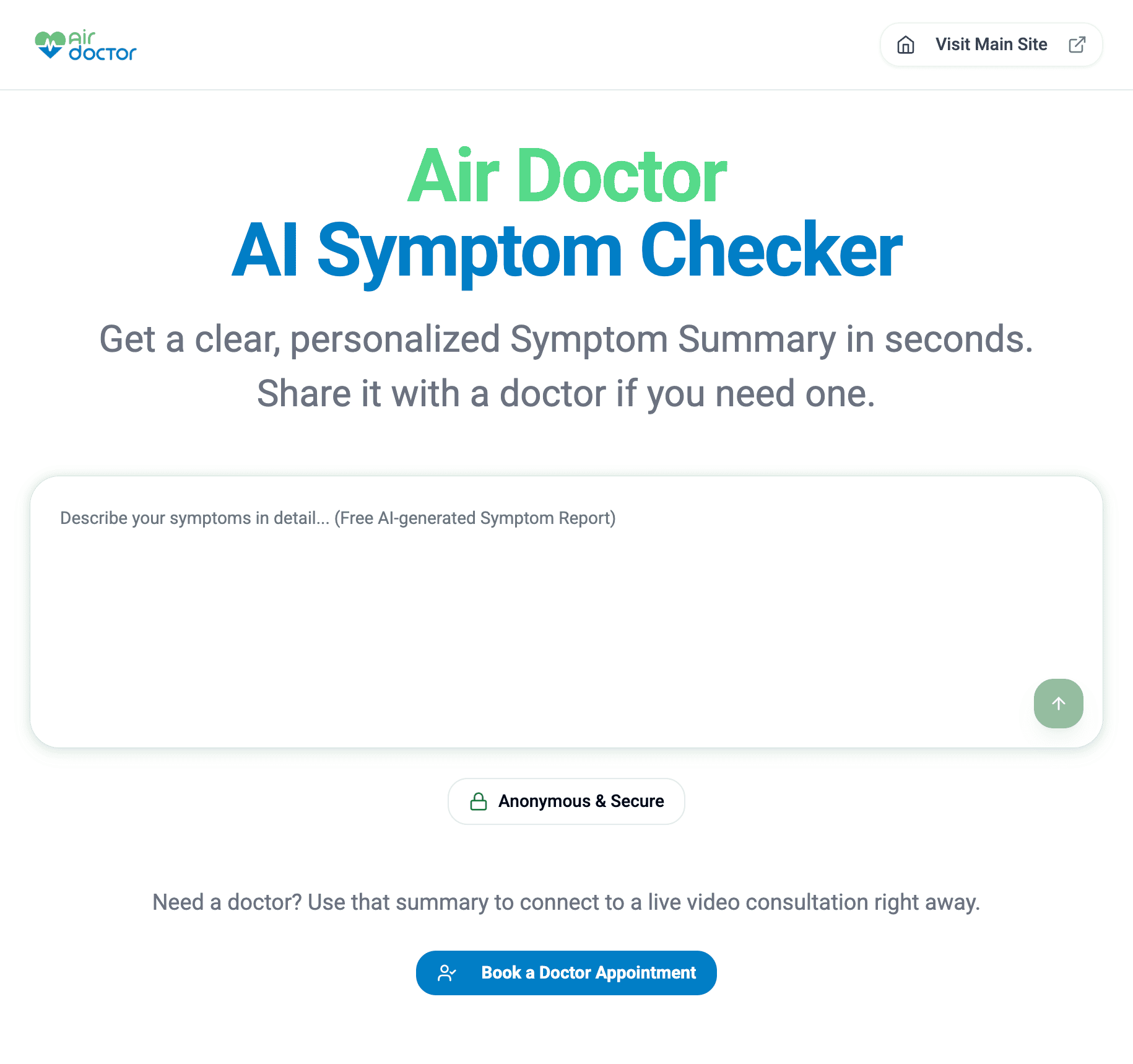
Air Doctor’s symptom checker was designed to make decision-making around symptoms (including fever) simpler and safer.
It uses a structured, step-by-step flow

Instead of an open chat box, the tool walks you through a clear series of questions about your symptoms, history, and daily impact.
It gives friendly, easy-to-understand explanations
Your results come in simple English — no medical jargon, no confusing descriptions.
It prioritises safety over guesses
The AI offers guidance, not diagnoses. Its focus is on helping you understand urgency and next steps.
It connects you with real doctors instantly

If the AI recommends care, you can immediately book a vetted doctor who speaks your language — something most symptom checkers don’t offer.
Conclusion
Fevers are common, and most of the time, they’re nothing to panic about. But paying attention to patterns, red flags, and how you’re feeling overall can help you decide when it’s time to seek care.
AI symptom checkers make this even easier by giving you fast, structured guidance when you need it most. Use them as a helpful first step, and follow your instincts if something feels off.
About Air Doctor
With the Air Doctor app in your pocket, you can access medical care and receive expert medical guidance anywhere you travel.
Air Doctor offers a wide range of benefits, including:
- A global network of multi-lingual doctors and specialists
- Choice of clinic, at-home (hotel), and video consultations
- Healthcare access in 90 countries
- An AI symptom checker that connects you directly to a medical specialist for your needs
- 24/7 multi-lingual support
- Transparent pricing and reviews
- Most common medical specialties, including cardiologists
FAQs
What temperature is considered a fever?
Generally, anything above 38°C (100.4°F) is considered a fever.
How long can you let a fever go before seeing a doctor?
If a fever lasts more than 3 days, gets worse, or keeps returning, you should speak to a doctor.
What are the red flags of a fever?
Trouble breathing, confusion, a spreading rash, stiff neck, dehydration, or persistent vomiting.
How do you know if a fever is serious?
If it’s very high, lasts too long, or comes with other worrying symptoms, it’s time to get medical advice.