
Most of us have done it — typed a symptom into Google and ended up convinced something serious is happening.
And it’s not your fault. Search engines are full of dramatic, outdated, or misleading content.
Medical misinformation spreads fast, and before you know it, a mild headache turns into a terrifying list of worst-case scenarios.
This guide helps you recognise unreliable health content and find clearer, safer alternatives — so you can stop the spiral before it starts.
Why Googling Symptoms Often Leads to Confusion

Googling your symptoms is tempting — it’s quick, it’s free, and it feels like a shortcut.
But it often causes more anxiety than clarity.
Here’s why:
1. Search engines prioritise attention, not always accuracy
The results you see are often the ones that get the most clicks — usually the scariest ones.
2. Worst-case scenarios spread the fastest
Fear-based content performs well online, so you tend to see alarming possibilities first.
3. Algorithms can’t tailor results to your medical history
Your age, health conditions, medications, or risk factors rarely factor into generic search results.
4. Symptoms overlap — a lot
For example, dizziness could be dehydration… or something far more serious. Google doesn’t differentiate.
5. Health-anxious people misinterpret vague explanations
And Google results rarely offer the nuance that real clinicians provide.
If you often find yourself spiraling, we’ve got a great guide on common medical symptoms people misinterpret.
How Misinformation Spreads Through Search Results
Medical misinformation doesn’t show up by accident — it spreads through familiar online patterns.
Clickbait headlines get more traction
They’re designed to grab attention, not educate.
Outdated articles still rank highly
Medical advice changes. Some widely shared resources haven’t been updated in years.
Websites publish generic, inaccurate lists
They produce content for traffic, not accuracy.
Social media amplifies unverified claims
Posts with emotional or shocking stories spread quickly — regardless of medical truth.
Personal blogs or forums feel trustworthy but aren’t medically reviewed
People sharing their experiences can be helpful, but they shouldn’t replace real guidance.
Signs You’re Reading Unreliable Health Content
Here’s how to spot medical misinformation fast:
- No citations or medical references
- Dramatic, fear-based language
- Promises of miracle cures
- Contradictions with NHS, CDC, or WHO guidance
- Overly broad symptoms with dozens of possible conditions
- Anonymous authors or no medical credentials
- No mention of red flags, nuance, or uncertainty
- If you spot one or more of these, close the tab.
Better Ways to Find Clear, Trustworthy Guidance

When you’re unwell, you don’t need drama — you need clarity.
Here’s where to look instead:
Official medical websites
Think websites like the NHS, CDC, Mayo Clinic, and WHO.
Sources with medical citations
These show you where the information comes from.
Clinically reviewed digital tools
Tools checked by doctors tend to be far safer.
AI symptom checkers using structured medical logic
These guide you through your symptoms step by step — unlike Google, which throws everything at you at once.
If you’re curious about how these tools actually work, you should check out our article on how AI symptom checkers work.
Keep a symptom log
This is more reliable than hopping between five different websites.
When to Turn to Professional Support Instead
Sometimes, you need a real clinician — not more internet scrolling.
Seek help when:
- Symptoms are getting worse
- You’re feeling anxious or overwhelmed
- Red flags appear (e.g., chest pain, trouble breathing, sudden severe headache)
- Self-care isn’t helping
- You need personalised advice, reassurance, or medication
Telemedicine and in-person GPs can give you the nuance the internet lacks.
If you want guidance on when symptoms actually are urgent, we’ve got a great guide talking about when symptoms are worth worrying about.
And if fever specifically is stressing you out, our guide to when to see a doctor for a fever may help.
How Air Doctor’s AI Symptom Checker Helps You Avoid the Misinformation Spiral
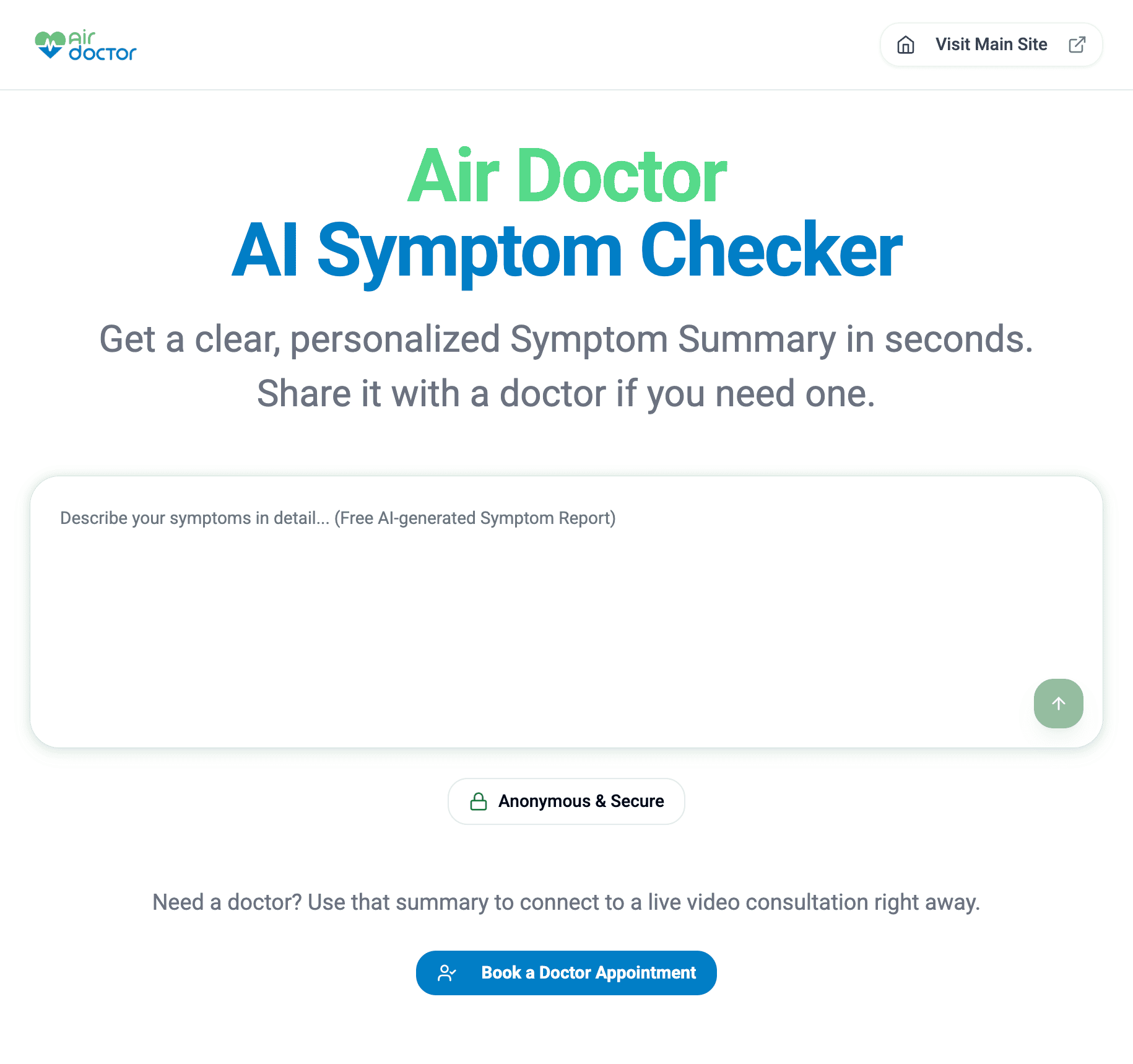
When you’re not feeling well, the last thing you need is a rabbit hole of worst-case scenarios.
Air Doctor’s AI Symptom Checker gives you calm, structured guidance — without the panic, exaggeration, or guesswork of random search results.
It asks the right questions

Our symptom checker follows an 8-step list, breaking down things like duration, severity, related symptoms — not vague “web symptoms lists.”
It avoids dramatic or misleading explanations
Everything is written in simple, reassuring language.
It focuses on likely causes, not extremes
The tool prioritises safe, evidence-based guidance.
It gives you clear next steps
Self-care? Routine doctor? Urgent care?
You get immediate clarity.
And if you do need a doctor, you can book one instantly

Air Doctor connects you to vetted physicians online or in person — anywhere in the world.
In Short
The internet is full of medical misinformation — but you don’t have to get trapped in it.
Stick to trustworthy sources, use tools that prioritise accuracy over fear, and don’t hesitate to ask a real doctor for help when you need it.
About Air Doctor
With the Air Doctor app in your pocket, you can access medical care and receive expert medical guidance anywhere you travel.
Air Doctor offers a wide range of benefits, including:
- A global network of multi-lingual doctors and specialists
- Choice of clinic, at-home (hotel), and video consultations
- Healthcare access in 90 countries
- An AI symptom checker that connects you directly to a medical specialist
- 24/7 multi-lingual support
- Transparent pricing and reviews
- Most common medical specialties, including GPs
FAQs
How do I know if medical advice online is reliable?
Look for citations, medical reviewers, clear language, and alignment with official guidelines (NHS, CDC, WHO).
Why does Googling symptoms make me more anxious?
Search engines often show dramatic, worst-case content first — because it gets more clicks.
Are AI symptom checkers safer than Googling?
Generally yes, because they use structured medical logic, not generic or sensationalised lists.
They also offer clearer next steps and avoid dramatic exaggeration.