
When you’re not feeling well, it can be hard to know what to do first.
Should you check your symptoms online?
Should you book a telemedicine visit?
Or should you wait it out?
Both AI symptom checkers and telemedicine are incredibly helpful — but in different ways and at different moments.
Let’s break down when to choose each one, what they’re best for, and how they can work together to give you clearer, calmer answers.
How AI Symptom Checkers Offer Instant, On-Demand Guidance
AI symptom checkers are designed to give you fast, private clarity the moment you start feeling unwell.
They’re perfect when you want answers quickly, especially late at night or when you’re abroad.
Here’s what they do best:
They’re available 24/7
Anytime, anywhere — no waiting room, no appointment, no stress.
They help you understand what your symptoms might mean
AI tools use structured logic to interpret symptoms and explain possible causes.
If you’re curious about how this works behind the scenes, you should look at our article on how AI symptom checkers work.
They ask smart follow-up questions
Rather than a single vague question box, good AI tools dig deeper with prompts about duration, severity, and related symptoms.
They’re great for early triage
AI helps you understand whether something looks mild, moderate, or worth addressing sooner.
They reduce unnecessary appointments
If the symptom is likely mild, AI guidance helps you avoid panic or overbooking a doctor unnecessarily.
They help you decide if telemedicine is even needed
Sometimes you don’t need a doctor — you just need clarity.
What Telemedicine Provides That AI Can’t
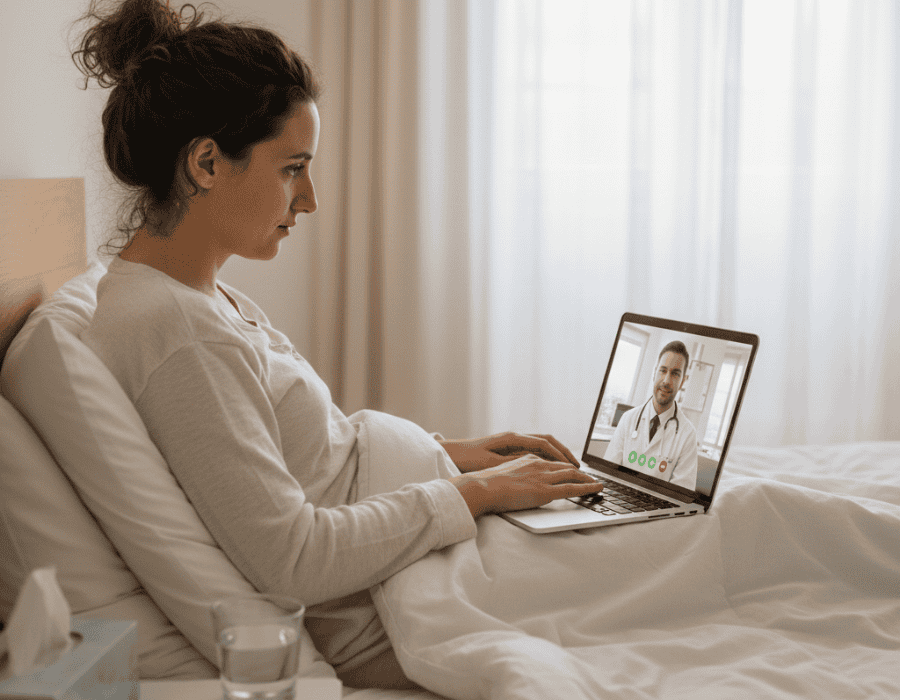
Telemedicine is the next step when you need human expertise, not just early guidance.
Here’s where speaking to a real clinician makes all the difference:
Human judgment and experience
Doctors don’t just match patterns — they interpret nuance.
Visual assessment
A doctor can look at your rash, swelling, posture, or breathing and make observations an AI never could.
Emotional support and reassurance
When you’re scared or unsure, talking to a person can make everything feel calmer and easier.
Ability to prescribe medication or order tests
AI can point you in the right direction, but only a doctor can take action.
Better for persistent, worsening, or complex symptoms
If something isn’t improving, you need a professional to investigate what’s going on.
If you’re wondering how AI compares to doctors more broadly, we’ve got an in-depth article on whether AI can replace doctors.
Situations Where AI Is the Better First Step
AI symptom checkers shine in situations where you’re looking for quick clarity — not a full medical consultation.
Use AI first when:
Your symptoms are new or mild
Scratchy throat? Light stomach discomfort? Early cold symptoms?
AI can help you understand whether these are worth worrying about.
You’re not sure if something serious is going on
Sometimes you just need a clearer sense of whether a symptom “counts” as concerning.
You want guidance quickly
Especially helpful during late-night spirals or when travelling abroad.
You want a structured way to assess symptoms
AI helps you think through things logically, not emotionally.
GP or telemedicine appointments are difficult to get
Long wait times make quick clarity invaluable.
Anxiety is making symptoms feel bigger than they are
AI offers calm, neutral guidance.
If you often struggle to interpret your symptoms, we’ve got an entire guide on common symptoms people misinterpret.
When Telemedicine Should Be Your Next Move

Some symptoms need a professional’s eyes, ears, and experience.
Telemedicine is the better option when:
Symptoms keep getting worse
If something is intensifying instead of improving, it’s time for a doctor.
You have a fever lasting more than 3 days
We’ve got a great guide about when to see a doctor for fever.
A rash is spreading or looks unusual
Doctors can assess rashes visually in a way AI never can.
Breathing problems, chest discomfort, or strong headaches appear
These always deserve medical attention.
Persistent vomiting or dehydration
A serious sign your body needs help.
Symptoms affect your daily functioning
If you can’t eat, drink, sleep, or focus normally, telemedicine is the right choice.
You need medication or reassurance
Doctors can act. AI can only inform.
How Both Tools Work Together for Smarter Care Decisions
The smartest approach isn’t choosing one or the other — it’s knowing how they complement each other.
AI gives early clarity
You understand what’s happening and what to watch for.
Telemedicine gives personalised medical interpretation
A professional brings nuance, experience, and emotional support.
AI summaries help doctors work faster
AI symptom checkers help organise information so your telemedicine visit is more efficient.
Together, they reduce confusion and unnecessary delays
Especially for travellers, people waiting for GP appointments, or anyone who tends to panic-Google symptoms.
We’ve also got a great guide on when symptoms are worth worrying about.
How Air Doctor Makes Both Options Easier
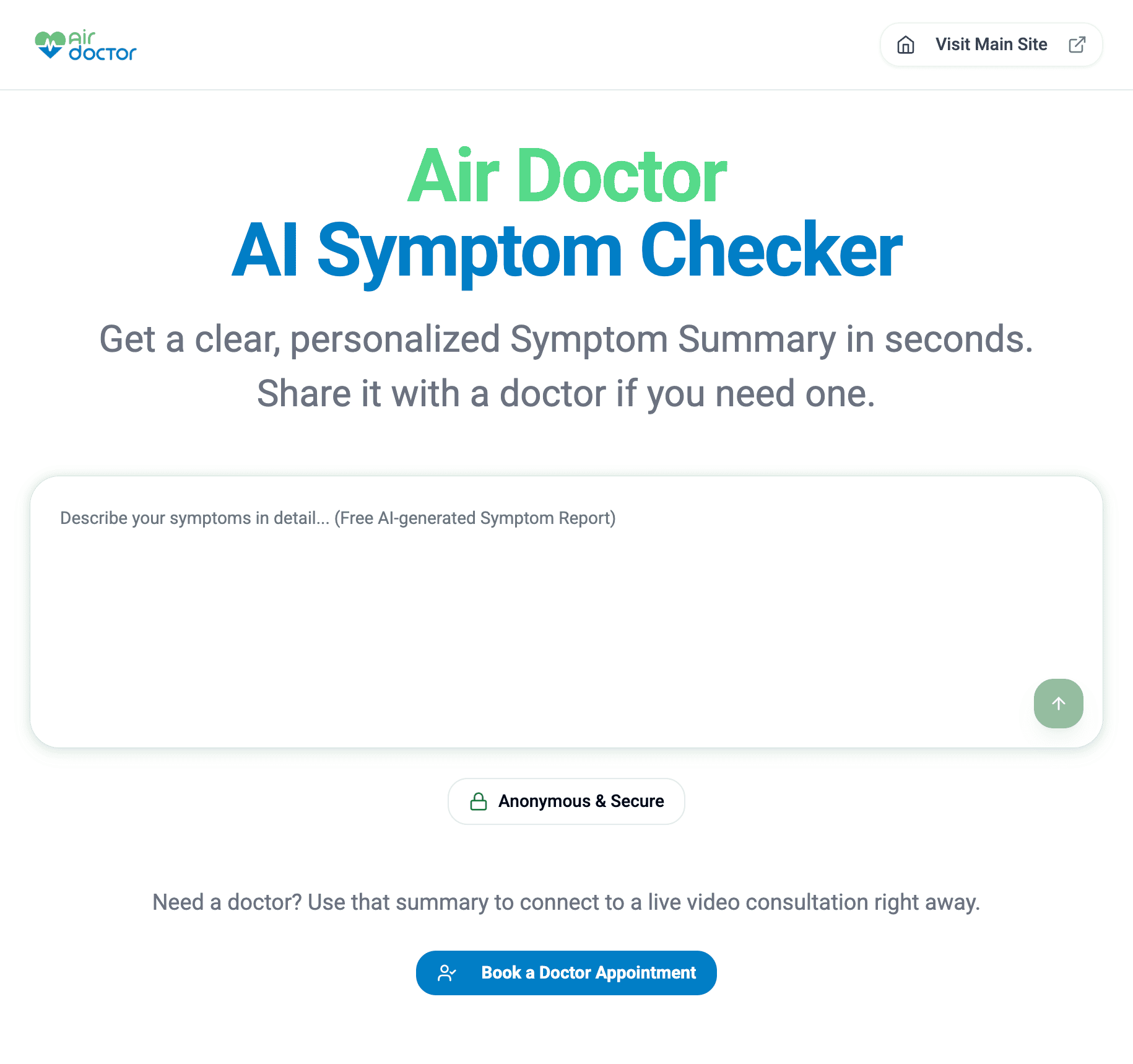
Air Doctor brings everything together so you can move from quick clarity to expert care in minutes — all in one place.
Instant Guidance With the AI Symptom Checker

- Structured questions create a clearer picture
- Helps you understand severity
- Works globally, anytime
Helps You Decide If Telemedicine Is Needed
- Clarifies whether self-care, routine care, or a doctor makes sense
- Prevents unnecessary appointments
- Ideal for early symptoms or uncertainty
Smooth Transition From AI to Real Doctors

- Book vetted doctors directly
- Online or in-person appointments
- Available in multiple languages
Designed for Travellers, Expats, Families, and Busy Adults
- Works wherever you are
- Helps you navigate unfamiliar healthcare systems
- Perfect when local GP access is limited
One Platform for Both Early Guidance and Medical Care
- AI triage + real doctors = complete support
- Reduces worry
- Helps you take the right next step without guesswork
In Short
AI symptom checkers are perfect for early clarity.
Telemedicine is best for expert advice, reassurance, and action.
Together, they help you make smarter, calmer decisions about your health — without the late-night panic spirals.
About Air Doctor
With the Air Doctor app in your pocket, you can access medical care and receive expert medical guidance anywhere you travel.
Air Doctor offers a wide range of benefits, including:
- A global network of multi-lingual doctors and specialists
- Choice of clinic, at-home (hotel), and video consultations
- Healthcare access in 90 countries
- An AI symptom checker that connects you directly to a medical specialist
- 24/7 multi-lingual support
- Transparent pricing and reviews
- Most common medical specialties, including cardiologists
FAQs
Are AI diagnoses more accurate than doctors?
No. AI doesn’t diagnose. AI tools analyse symptoms and provide general guidance, but doctors offer hands-on assessment, emotional insight, and medical decision-making.