
Travel is exciting — but it also comes with health surprises.
From upset stomachs to unexpected fevers, injuries, or rashes, travel-related symptoms are incredibly common. And when you’re far from home, even minor issues can feel much more serious than they normally would.
That’s where AI symptom checker uses really shine. These tools give travelers fast, accessible guidance in real-life situations — helping you understand what’s happening and what to do next, without panic.
Sudden Gastrointestinal Illness Abroad

Stomach issues are one of the most common health problems travelers face. Diarrhea, nausea, vomiting, and cramps often appear after changes in food, water quality, or hygiene standards.
The challenge isn’t just the symptoms — it’s knowing whether they’re a normal travel upset or something that needs medical care.
An AI symptom checker helps by asking structured questions about duration, severity, hydration, and accompanying symptoms like fever. This makes it easier to tell the difference between something that can be managed with rest and fluids and something that shouldn’t be ignored.
If you’ve ever Googled stomach symptoms and ended up more anxious than before, we’ve got a great guide on AI symptom checkers vs Googling that explains why structured tools are often safer.
Fever or Flu-Like Symptoms Mid-Trip
Fever while traveling can be especially worrying. It might be a simple viral infection, travel fatigue, or dehydration — but it can also be linked to mosquito-borne illnesses or regional infections.
AI symptom checkers help assess fever by looking at how high it is, how long it’s lasted, and whether other symptoms are present. This allows travelers to understand urgency even when urgent care isn’t immediately accessible.
For a deeper dive into fever decisions, have a look at our guide on when to see a doctor for fever.
Unexplained Rashes, Bites, or Skin Conditions
Travel exposes you to new insects, allergens, plants, climates, and products. Rashes and bites often appear without a clear cause, which can be unsettling.
AI symptom checkers help interpret whether a rash or bite looks more like a mild reaction, a common insect bite, or something that needs professional review. This helps travelers avoid unnecessary panic — or avoid delaying care when it’s actually needed.
If you’ve noticed how often skin symptoms are misread, check out the common medical symptoms people misinterpret.
Respiratory Issues After Flights or in Polluted Cities
Flights, dry cabin air, pollution, and climate changes can all trigger respiratory symptoms. Shortness of breath, sinus pressure, coughing, or chest tightness are common concerns — especially for people with asthma or allergies.
AI symptom checker uses are particularly helpful here, because they help distinguish mild irritation from symptoms that require medical attention. This is especially valuable when symptoms appear shortly after travel and feel unfamiliar.
Injuries and Accidents on the Move
From twisted ankles during hikes to cuts, bruises, or minor falls, injuries are part of travel life.
The difficulty isn’t just the injury itself — it’s deciding whether you can manage it yourself or whether you need urgent care in an unfamiliar system.
AI symptom checkers help assess pain levels, swelling, mobility, and warning signs, which can save unnecessary emergency visits while still encouraging care when it’s needed.
Chronic Condition Flare-Ups While Traveling
Travel disrupts routines. Sleep schedules change, medications may be missed, diets shift, and stress increases. All of this can trigger flare-ups in chronic conditions like migraines, diabetes, hypertension, or digestive disorders.
AI tools help travelers monitor symptoms over time, notice patterns, and decide when adjustments or medical advice are needed — rather than reacting to a single bad day.
Mental Health and Stress-Related Symptoms on the Road
Travel stress, jet lag, cultural adjustment, and being far from home can all amplify anxiety, sleep problems, and stress-related physical symptoms.
AI symptom checkers help differentiate between anxiety-related sensations and physical symptoms that may need medical attention. That clarity alone can significantly reduce distress.
If you’ve ever wondered whether a symptom is anxiety or something more? Have a look at our guide on when symptoms are actually worth worrying about.
When AI Suggests Urgent Care or Local Medical Attention
One of the most important AI symptom checker uses is knowing when not to wait.
AI tools flag warning signs such as persistent high fever, severe pain, dehydration, confusion, breathing difficulties, or symptoms that worsen instead of improve.
They don’t diagnose, but they do help you recognise urgency and act sooner rather than later.
How AI Symptom Checkers Fit Into Your Travel Health Toolkit
AI symptom checkers work best as a first step, not a replacement for medical care.
They complement travel insurance, emergency contacts, pre-trip health prep, and local healthcare information. By reducing uncertainty, they help travelers make calmer, faster decisions and arrive better prepared if professional care is needed.
How Air Doctor’s AI Symptom Checker Helps Travelers Take the Right Next Step

Air Doctor brings everything together so you can move from quick clarity to expert care in minutes — all in one place. It’s designed for real travel situations, when you need answers fast and don’t know where to turn.
Instant Guidance Through 5 Simple Questions
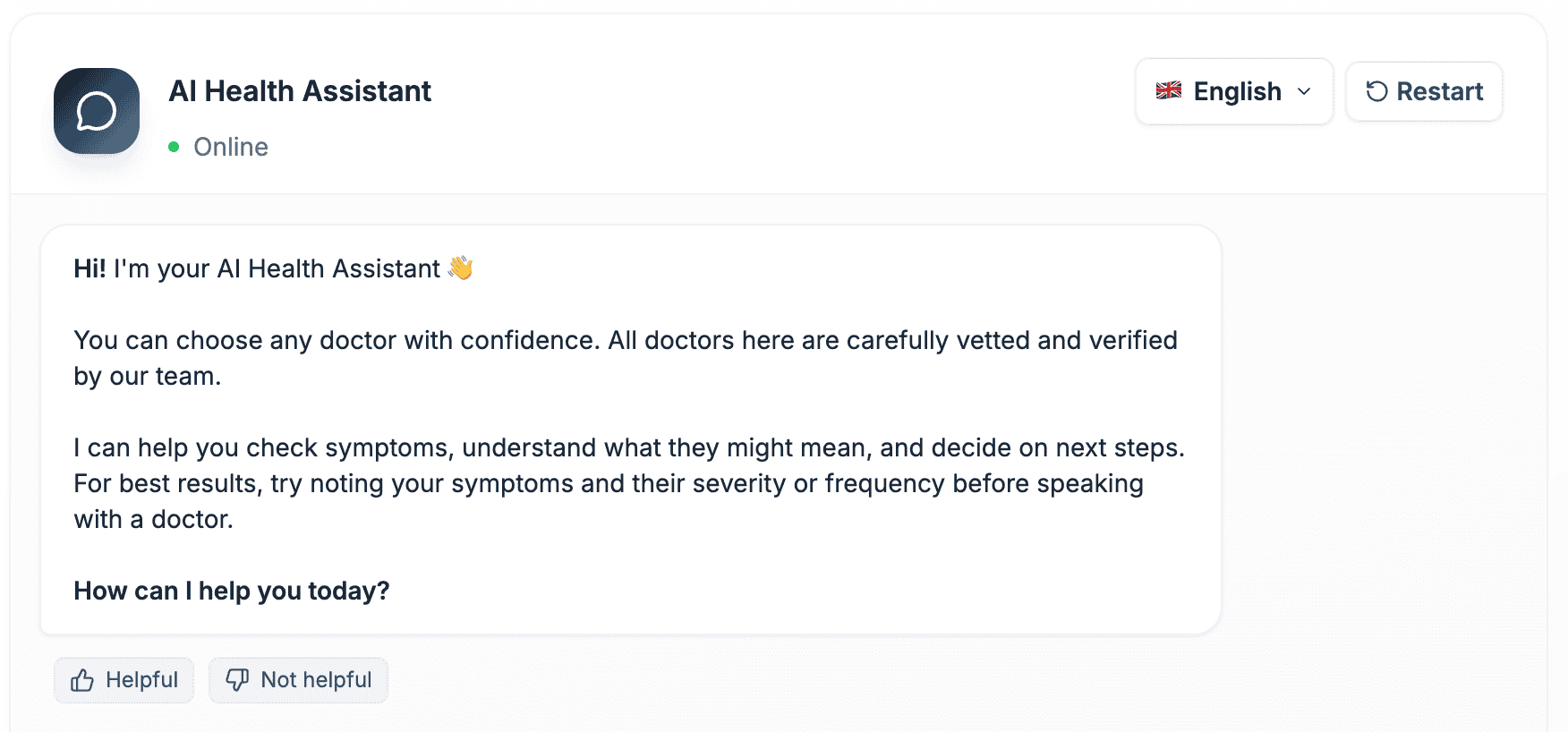
Instead of long forms or vague chat boxes, Air Doctor’s AI Symptom Checker asks just five focused questions. These cover what you’re feeling, how severe it is, how long it’s been going on, and how it’s affecting you.
This short, structured approach creates a clearer picture of your symptoms without overwhelming you — which is especially helpful when you’re tired, stressed, or unwell abroad.
Helps You Understand Severity and Urgency
Based on your answers, the AI helps you understand whether your symptoms are likely mild, worth monitoring, or something that should be checked by a professional.
The goal isn’t diagnosis. It’s clarity. You get a straightforward sense of urgency so you can decide what makes sense next — rest, monitor, or speak to a doctor.
Helps You Decide If Medical Care Is Needed
One of the biggest challenges while traveling is knowing whether you actually need to see a doctor.
The AI Symptom Checker helps clarify whether self-care is appropriate or whether it’s a good idea to speak with a medical professional. This can prevent unnecessary appointments — while also helping you avoid delaying care when it matters.
Seamless Connection to a Licensed Medical Specialist

If the AI indicates that medical care is recommended, Air Doctor doesn’t leave you there. You can connect directly to a licensed medical specialist, without searching for clinics or navigating unfamiliar systems.
You can book online consultations or in-person appointments, depending on what’s available and what you need — all through the same platform.
Designed for Travelers and Life on the Move
Air Doctor’s AI Symptom Checker works wherever you are, as long as you have an internet connection. It’s built for travelers, expats, families, and busy adults who don’t always have easy access to a local GP.
By combining fast AI guidance with real medical professionals, it helps reduce stress and removes guesswork — especially when you’re far from home.
FAQs
Yes. They provide early guidance, help assess urgency, and reduce anxiety — especially when healthcare access is unfamiliar or limited.
They are safe as a guidance tool. They don’t replace doctors, but they help you decide when professional care is needed.
Common uses include stomach issues, fever, rashes, bites, injuries, respiratory symptoms, dehydration, and stress-related symptoms.
If symptoms worsen, don’t improve, or trigger red flags, you should always seek professional care — even if initial guidance suggested monitoring.