
Getting sick while travelling is stressful.
Getting sick in a country with limited or unfamiliar healthcare can feel overwhelming.
Language barriers, long distances to clinics, unclear costs, and not knowing what’s “serious enough” to act on can turn even mild symptoms into a source of anxiety.
This is where AI tools — especially symptom checkers — can offer real support. Not by replacing doctors, but by helping you understand what’s happening and what to do next when care isn’t immediately available.
Understanding the Challenges of Getting Sick Abroad

When you’re far from home, healthcare looks very different.
Common challenges include:
- Limited access to doctors or clinics
In some regions, medical facilities may be hours away. - Long travel times for care
Seeing a doctor might require transport you don’t have — or can’t manage while unwell. - Language barriers
Explaining symptoms accurately can be difficult, especially in urgent situations. - Unclear standards or costs
You may not know what care is available, how it works, or how much it will cost. - Difficulty judging urgency
Is this something you can wait out — or something you shouldn’t ignore? - Increased anxiety
Being sick far from home often makes symptoms feel more frightening. - No access to your medical history
Doctors may not know your background, allergies, or conditions.
If you’ve ever struggled to understand whether symptoms are serious, check out our guide on when symptoms are actually worth worrying about.
How AI Gives You Immediate Clarity When Symptoms Hit
When you’re abroad, timing matters.
AI tools help fill the gap between “something feels off” and “I can see a doctor.”
Available 24/7, Wherever You Are
No clinic hours. No waiting rooms.
AI symptom checkers work anytime, even in remote locations.
Structured Symptom Assessment
Instead of vague searches, AI asks targeted questions about duration, severity, and related symptoms.
Helps Reduce Panic
AI doesn’t jump to worst-case scenarios. It focuses on what’s most likely and what to watch for.
Provides Urgency Guidance
You’ll get a clearer sense of whether symptoms can be monitored, need routine care, or require urgent attention.
Less Reliance On Unreliable Search Results
If Googling symptoms tends to make you anxious, our guide to AI symptom checkers vs Googling explains why.
Practical Ways AI Supports You Until You Can See a Professional

AI isn’t just about answers — it’s about support while you wait.
Monitoring Symptoms Over Time
You can track whether things are improving, staying the same, or getting worse.
Highlighting Red Flags
AI helps you recognise warning signs that shouldn’t be ignored.
Clear Explanations In Simple Language
No medical jargon. Just understandable guidance.
Helping You Decide Whether Travel To A Clinic Is Necessary
This can save unnecessary journeys, cost, and stress.
Preparing Symptom Summaries
When you do see a doctor, you’ll be able to explain your symptoms more clearly.
Offering Reassurance
Sometimes, knowing that a symptom is commonly mild is enough to help you rest and recover.
If fever is one of the symptoms you’re dealing with, check out our guide on when to see a doctor for fever.
Key Benefits of Using AI in Low-Resource Healthcare Settings
AI tools are especially valuable when healthcare access is limited.
No Need for Immediate Physical Access to Care
In countries with limited healthcare infrastructure, seeing a doctor often isn’t as simple as walking into a clinic. Facilities may be far away, understaffed, or difficult to reach — especially if you’re already unwell.
AI symptom checkers help fill that gap by offering guidance without requiring immediate physical access to care. As long as you have an internet connection, you can get structured information about your symptoms and understand whether they’re likely mild or something that needs attention.
This doesn’t replace seeing a doctor, but it gives you clarity while access to care is delayed or unavailable.
Works Even in Remote or Rural Areas
Remote and rural regions often have fewer healthcare facilities, longer travel times, and limited specialist access. In these settings, even basic medical advice can be hard to come by.
AI tools work wherever you are — whether you’re in a small village, a remote work site, or travelling far from major cities. This makes them especially useful when clinics are hours away or only open on certain days.
Having some form of medical guidance available at all times can reduce uncertainty and help you decide whether making that journey is truly necessary.
Supports People With Limited Local Healthcare Options
Not everyone has reliable access to local healthcare. Some regions lack specialists, consistent staffing, or clear pathways to care — particularly for non-residents or temporary visitors.
AI tools like symptom checkers provide a consistent, familiar way to assess symptoms, regardless of where you are. This can be especially helpful when local healthcare systems are unfamiliar or difficult to navigate.
For people living or working in these environments, AI acts as a steady support tool rather than leaving them to rely on guesswork or hearsay.
Reduces Unnecessary Travel or Expenses
In low-resource settings, seeking medical care often comes with significant costs: transport, time off work, accommodation, or private clinic fees. Without guidance, people may travel “just in case,” even when symptoms are likely mild.
AI tools help you understand whether symptoms can safely be monitored or whether they truly warrant medical attention. This can prevent unnecessary journeys and reduce financial strain.
When healthcare resources are limited, avoiding unnecessary use helps both individuals and local systems.
Empowers Patients to Make Informed Decisions
One of the biggest challenges in low-resource settings is uncertainty. Without clear information, people may delay care too long, or seek it too early out of fear.
AI symptom checkers empower patients by explaining symptoms in context and highlighting what to watch for. This helps people make decisions based on information rather than anxiety.
Feeling informed also brings a sense of control, which is especially important when professional care isn’t immediately available.
Helpful for Travellers, Expats, Aid Workers, and Digital Nomads
People who move frequently often don’t have a “home” healthcare system they can rely on. Travellers, expats, aid workers, and digital nomads regularly face unfamiliar medical environments.
AI tools offer continuity when everything else changes. No matter the country, the process for assessing symptoms stays the same — clear questions, calm explanations, and practical guidance.
This consistency makes managing health concerns abroad far less stressful and far more manageable.
If you’re curious about the limitations of AI, we’ve got a great guide on why AI can’t replace doctors.
When You Still Need to Seek In-Person Medical Support
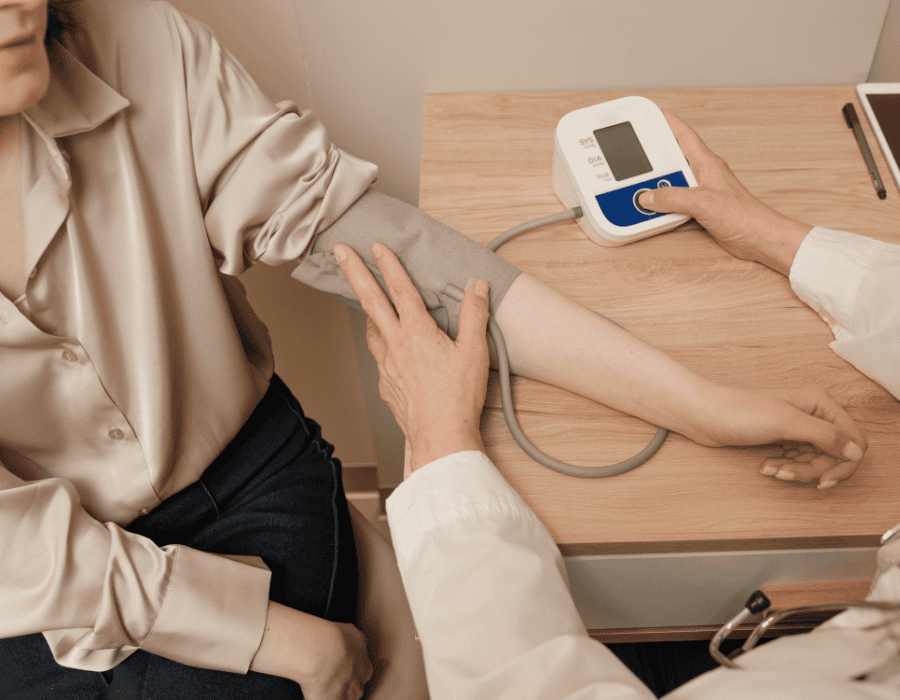
AI is helpful, but it has limits.
You should seek in-person care if you experience:
- Symptoms that worsen rapidly
- Severe or persistent pain
- Trouble breathing or chest pain
- High or long-lasting fever
- Confusion or neurological symptoms
- Injuries, infections, or trauma
- Situations requiring tests, imaging, or medication
AI should guide decisions, not replace professional care.
If you want to understand how trustworthy these tools are, we’ve got an in-depth article on whether AI symptom checkers can be trusted.
How Air Doctor’s AI Symptom Checker Can Help
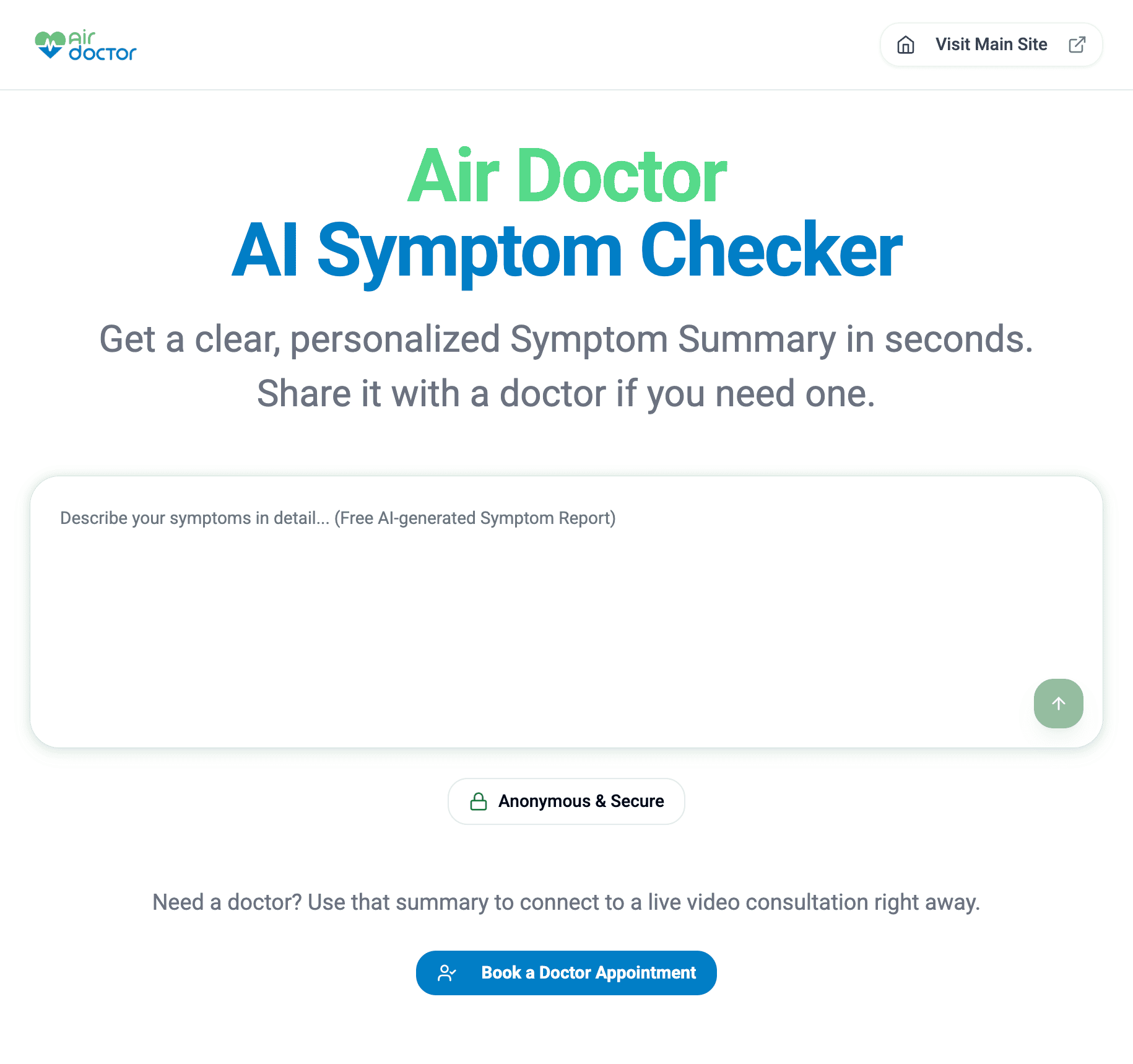
Air Doctor’s AI Symptom Checker is designed for exactly these situations — when you’re unwell and healthcare access isn’t straightforward.
Structured, step-by-step symptom guidance

The tool walks you through a clear flow, helping the AI understand your symptoms accurately.
Simple, calm explanations
You get a clear summary and practical next steps — without panic-inducing language.
Focus on safety, not diagnosis
The AI offers guidance and urgency levels, not labels.
Direct access to real doctors

If medical care is recommended, Air Doctor connects you to vetted doctors — online or in person — who speak your language.
This is especially valuable when you’re abroad and unsure where to turn.
In Short
Getting sick abroad is common — and manageable.
AI tools can’t replace doctors, but they can give you clarity, reassurance, and direction when healthcare access is limited.
Use AI to understand your symptoms.
Seek in-person care when red flags appear.
And don’t face uncertainty alone when better tools are available.
About Air Doctor
With the Air Doctor app in your pocket, you can access medical care and receive expert medical guidance anywhere you travel.
Air Doctor offers a wide range of benefits, including:
- A global network of multi-lingual doctors and specialists
- Choice of clinic, at-home (hotel), and video consultations
- Healthcare access in 90 countries
- An AI symptom checker that connects you directly to a doctor.
- 24/7 multi-lingual support
- Transparent pricing and reviews
- Most common medical specialties, including cardiologists
FAQs
AI is commonly used for symptom assessment, triage, imaging support, scheduling, and administrative tasks.
AI depends on data quality and cannot perform physical exams or replace human judgment.
Yes. That’s why AI tools are designed to support decision-making — not replace medical professionals.