Skip to content

We’ve all been there.
You feel something unusual (a headache, a pain, a fever) and your brain goes straight to:
“Should I worry about this?”
Some people panic over every twinge. Others ignore things that genuinely need attention.
And honestly? Both reactions are understandable. Symptoms don’t always behave in ways that make their severity easy to judge.
This guide walks you through how to understand which symptoms matter, which ones often settle on their own, and how to recognise meaningful changes — so you can feel calm, confident, and informed.
Why It’s Hard to Judge Symptom Severity on Your Own

Most people find it difficult to know when a symptom is serious because:
Symptoms overlap between mild and serious conditions
A headache could mean you’re dehydrated — or it could be a sign of something more significant.
The overlap makes interpretation tricky.
Internet searches tend to show worst-case scenarios
If you’ve ever Googled chest pain and gone down a rabbit hole, you know exactly how fast things escalate.
We’ve got a great guide on AI symptom checkers vs Googling that explains things better.
Anxiety amplifies physical sensations
When you’re stressed, tired, or overwhelmed, normal bodily sensations can feel much bigger.
Lack of medical context makes minor things feel major
Without medical training, it’s hard to know when “uncomfortable” becomes “concerning.”
Symptoms often change over time
You may feel “okay-ish” in the morning and awful at night — or vice versa — making it hard to track what’s actually happening.
Many people don’t know what “normal” feels like for their body
If you’re young, newly independent, or someone who rarely gets sick, symptom interpretation can feel like guesswork.
Common Signs That Should Prompt More Attention
Not every symptom is urgent — but some deserve a closer look.
Here are the ones worth taking seriously:
- Chest pain or pressure
- Trouble breathing
- A sudden, severe headache
- Fever lasting more than 3 days
- Persistent vomiting or signs of dehydration
- Confusion or difficulty staying awake
- Unusual bleeding
- A rash that spreads quickly
- Severe abdominal pain
- Sudden numbness, weakness, or slurred speech
- Symptoms that keep getting worse instead of improving
- These don’t automatically mean something serious is happening — but they do mean you should speak to a medical professional soon.
Related read: medical symptoms people commonly misinterpret.
Situations Where Waiting Might Be Reasonable
Sometimes, the safest thing to do is simply monitor your symptoms.
Situations where waiting is typically okay include:
- A mild fever that’s improving
- Cold or flu symptoms without red flags
- Occasional headaches linked to stress or dehydration
- Digestive upset after eating something heavy or unusual
- Brief dizziness after standing up quickly
- Soreness after exercise
- Light stomach cramps that settle within hours
- Symptoms that are steadily improving
The key is not to look at a single moment — but the overall pattern.
How to Look for Changes That Matter
If you only track one thing, make it this:
Is the symptom getting better, worse, or staying the same?
Beyond that, here’s what to notice:
Patterns over time
Symptoms that improve over 24–48 hours are usually less concerning than ones that intensify.
How the symptom affects daily life
If you can’t eat, drink, walk, sleep, or concentrate because of the symptom, it deserves more attention.
New symptoms appearing
For example, a mild fever becomes a fever + rash, or a cough becomes a cough + chest pain.
Sudden changes
Rapid shifts are more important than slow ones.
Symptoms that stop responding to rest or medication
If “wait and see” stops working, it’s time to get help.
Your intuition
If something feels “not right,” listen to that feeling — even if the symptom looks mild.
Getting Help When You’re Still Unsure
Not every symptom gives you a clear answer — and that’s where getting help early makes a difference.
Here are your options:
Pharmacists
Great for quick advice about mild symptoms and over-the-counter treatment.
GP or family doctor
Best for symptoms that are persistent, confusing, or worsening.
Urgent care
Useful when something needs attention soon, but it’s not life-threatening.
Telemedicine or online doctors
Ideal if you’re travelling, abroad, or can’t get a local appointment quickly.
AI symptom checkers
These tools help you understand your symptoms using structured questions.
If you’re curious how they work, we’ve got a great guide on how AI symptom checkers work.
They don’t diagnose — but they do help you understand urgency and decide what to do next.
How Air Doctor’s AI Symptom Checker Helps When You’re Unsure
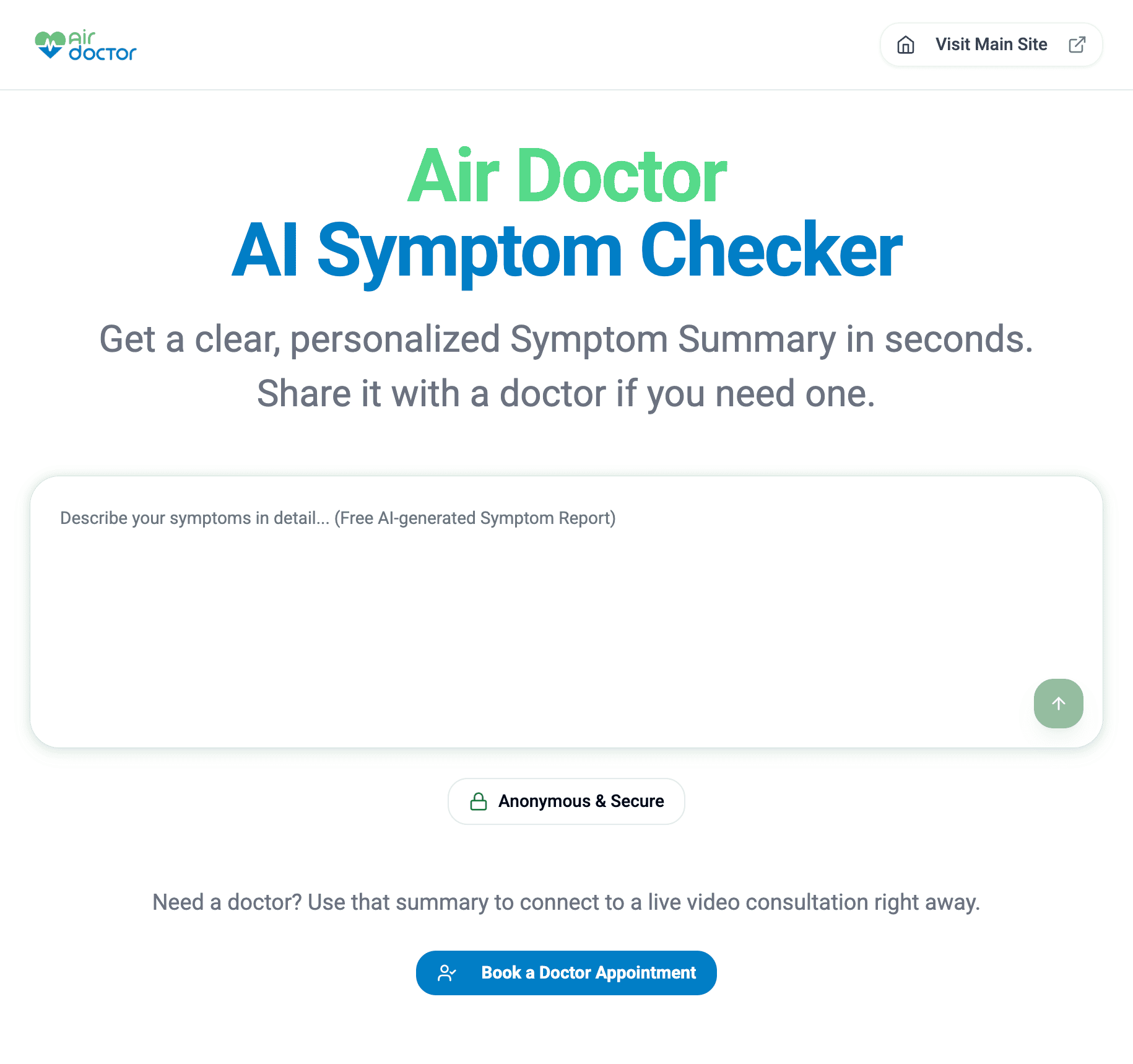
When your symptoms feel confusing — not clearly mild, not clearly serious — Air Doctor’s AI Symptom Checker gives you quick, private clarity.
It guides you through a structured, step-by-step flow

Instead of random chat prompts, it follows an organised process that asks about your symptoms, history, daily impact, and more.
This gives the AI a clearer picture of what’s going on.
It explains everything in simple English
No jargon, no overwhelming medical language.
It focuses on guidance, not diagnoses
The tool helps you understand whether your symptoms look mild, moderate, or worth checking.
If you need a doctor, it connects you directly

You can book a vetted doctor — online or in person — anywhere in the world.
Perfect for travellers, parents, anxious users, or anyone stuck waiting for an appointment.
In Short
Symptoms are confusing — and it’s normal to feel unsure.
You don’t need to panic over every twinge, but you also shouldn’t ignore your body when something feels off.
The key is to watch for changes, understand red flags, and get help when you need it.
And if you’re stuck in the grey area?
A few simple questions from a structured tool can give you the clarity you need.
About Air Doctor
With the Air Doctor app in your pocket, you can access medical care and receive expert medical guidance anywhere you travel.
Air Doctor offers a wide range of benefits, including:
- A global network of multi-lingual doctors and specialists
- Choice of clinic, at-home (hotel), and video consultations
- Healthcare access in 90 countries
- A free-to-use AI symptom checker that connects you directly with a medical specialists
- 24/7 multi-lingual support
- Transparent pricing and reviews
- Most common medical specialties, including GPs
FAQs
When should I see a doctor about symptoms?
If symptoms are severe, worsening, long-lasting, or accompanied by red flags such as chest pain, difficulty breathing, or confusion, you should seek medical advice.
What are red flags I shouldn’t ignore?
Chest pain, trouble breathing, sudden severe headaches, dehydration, unusual bleeding, confusion, a spreading rash, or neurological symptoms like numbness or weakness.
How long should I monitor symptoms?
Mild symptoms often improve within 24–72 hours. If they don’t, or if they worsen at any point, it’s best to speak with a healthcare professional.