Skip to content

We’ve all been there: you notice a weird sensation, Google it, and suddenly you’re convinced something is seriously wrong.
Or the opposite happens — you shrug off a symptom that quietly lingers for weeks.
Misinterpreting symptoms is incredibly common.
Why? Because our bodies can be confusing, symptoms overlap, and our minds tend to jump to the wrong conclusions — especially when we rely on search engines instead of structured medical logic.
Today, we’re breaking down why we misread our symptoms, the most common medical symptoms people misinterpret, and how to understand your body without panic.
Why We Often Misread What Our Symptoms Mean

Our brains aren’t always great at sorting real health signals from fear, stress, or habit.
Here’s why misunderstandings happen so easily:
- We jump to worst-case scenarios. It’s a normal survival instinct, but it fuels health anxiety.
- We rely on Google, which shows the most clickable results instead of the most accurate ones.
- (This is exactly why so many people spiral. If you’re curious, here’s a helpful breakdown of AI symptom checkers vs Googling symptoms.)
- Many symptoms overlap. For example, chest tightness could come from anxiety, muscles, or your heart — all very different causes.
- Past experiences shape our reactions. If you’ve had a scary health moment, you may assume the worst next time.
- Stress amplifies how sensations feel. Anxiety itself can create physical symptoms.
- Most people never learned what’s “normal.” Especially young adults still figuring out how their bodies behave.
In short, it’s not your fault — human bodies are genuinely tricky.
Early Signs People Commonly Confuse
These symptoms often get misread as “nothing”… or misread as something dramatically worse:
Fatigue
Brushed off as being tired — but could be anemia, thyroid issues, or chronic conditions.
Shortness of breath
Dismissing it as being unfit, when it could be stress… or something more.
Sudden headaches
Often blamed on dehydration or screens, but sometimes linked to hormonal changes, tension, or migraines.
Digestive issues
People often assume “food sensitivity,” yet bloating, nausea, or cramps can come from IBS, infections, or anxiety.
Chest discomfort
Easy to mistake for muscle strain — or panic — yet people also fear it’s always the heart. Both are possible.
Mild fevers
Often ignored, yet they can signal your body fighting infection.
Skin changes
Rashes, redness, or bumps often get mislabeled as allergies when they could be irritation, infection, or dryness.
Symptoms That Feel Serious but Usually Aren’t
Some symptoms feel dramatic but are often caused by something harmless:
Sharp chest pains
Often muscle spasms or costochondritis, not always heart-related.
“Electric zap” headaches
Commonly nerve sensitivity, posture, or tension.
Heart palpitations
Stress, caffeine, dehydration, or mild arrhythmias can all trigger them.
Dizziness
Often due to inner-ear issues, low blood sugar, or standing too fast.
Pins and needles
Posture or nerve compression, not necessarily neurological disease.
Stomach cramping
Gas or digestive irritation is a frequent cause — not something immediately serious.
Of course, exceptions exist, so worsening symptoms always deserve attention.
Symptoms That Seem Mild but Deserve Attention
These are the “quiet” symptoms people ignore — even though they sometimes signal something deeper:
- Unexpected weight loss
- Persistent cough for weeks
- Fatigue that doesn’t improve with rest
- Changes in bowel habits
- Excessive thirst or frequent urination
- Shortness of breath with mild activity
- Persistent chest pressure
- New or changing moles
- Swelling in the legs or feet
Mild symptoms can matter because they reflect a pattern — not a single moment.
How to Get Better at Understanding Your Body’s Signals
A few simple habits can make a huge difference in how you interpret your symptoms:
1. Look for patterns, not single sensations
One-off symptoms can be misleading. Patterns reveal more.
2. Track your symptoms
Write down duration, severity, triggers, and changes.
3. Learn your personal baseline
What’s “normal” for you may not be normal for someone else.
4. Avoid jumping straight to Google
Search engines are built for clicks, not accuracy.
If you want a clear comparison of Google vs structured tools, we’ve got a great guide breaking down how AI symptom checkers work.
5. Use AI symptom checkers for calm, structured guidance
They ask follow-up questions, collect context, and help you understand possibilities — not diagnoses.
6. Know when to seek medical care
If something is persistent, worsening, or feels unusual for your body, speak to a professional.
7. Trust your intuition
If something feels “off,” don’t ignore it.
Why Air Doctor’s AI Symptom Checker Helps When You’re Unsure What Your Symptoms Mean
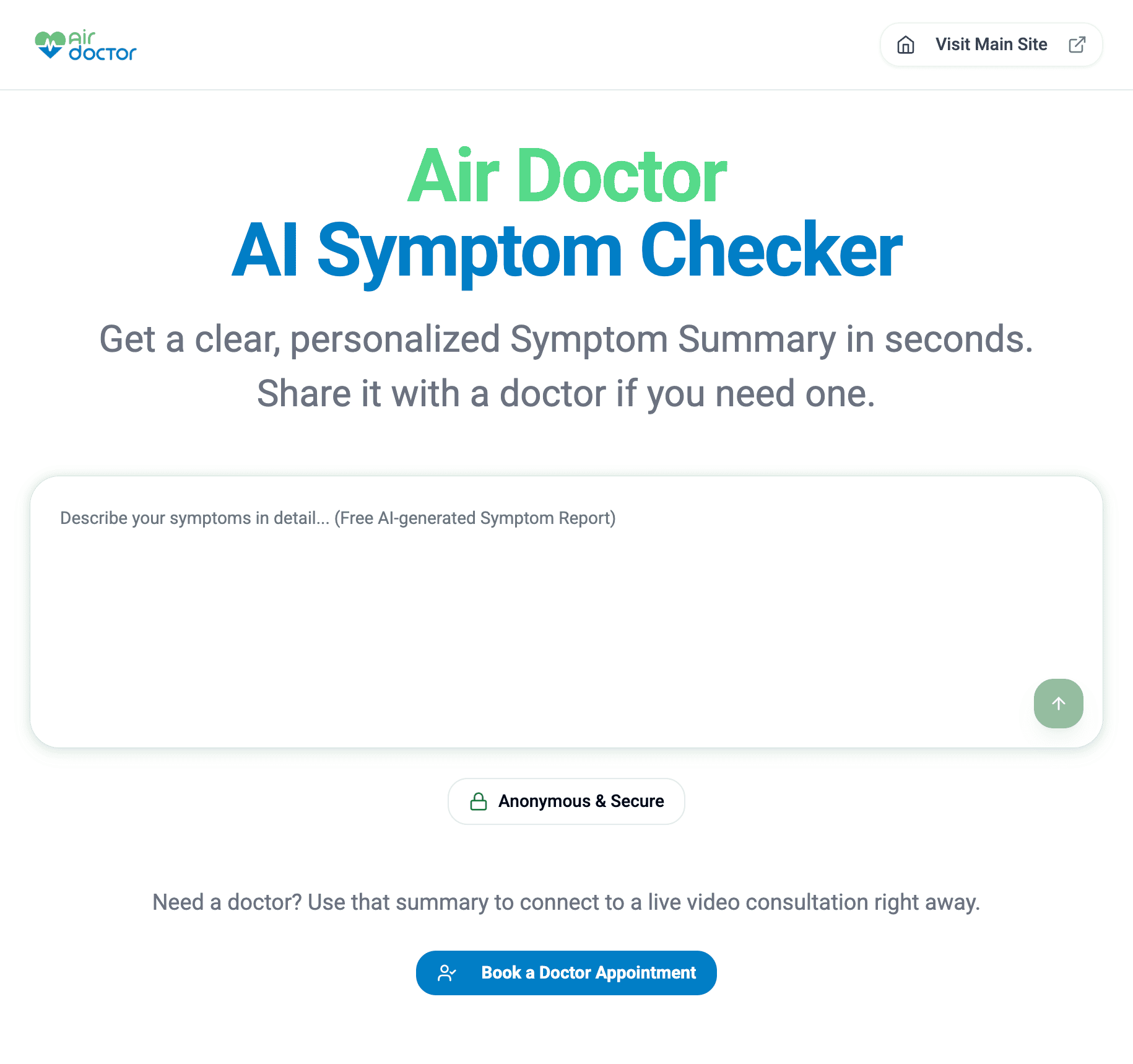
When your symptoms are confusing — or you can’t tell whether something is serious or just “one of those things” — a structured tool can make a huge difference. Air Doctor’s AI Symptom Checker is designed to give you quick, private clarity without the overwhelm of Googling or the guesswork of interpreting symptoms on your own.
It guides you through a clear, step-by-step flow

Instead of asking vague questions, the checker walks you through an easy 8-step process that covers what you’re feeling, how long it’s been happening, your medical history, and how the symptom affects your day.
This helps the AI understand your situation far more accurately than a simple search box.
It helps you understand what your symptoms might mean
The tool summarises your symptoms in simple language, highlights possible explanations, and gives you guidance on whether it’s likely something mild or something that deserves a doctor’s attention.
It doesn’t diagnose — it guides
This matters.
It won’t tell you, “You have X.”
Instead, it gives safe, sensible next steps so you can make informed decisions without panic.
And if you do need a doctor… you’re already connected
This is where Air Doctor is different.
If the AI suggests medical attention, you can immediately book a vetted doctor — online or in person — who speaks your language.

For travellers, expats, busy parents, or anyone feeling unsure, it’s a simple way to get clarity without stress.
About Air Doctor
With the Air Doctor app in your pocket, you can access medical care and receive expert medical guidance anywhere you travel.
Air Doctor offers a wide range of benefits, including:
- A global network of multi-lingual doctors and specialists
- Choice of clinic, at-home (hotel), and video consultations
- Healthcare access in 90 countries
- An AI symptom checker that connects you directly to a doctor
- 24/7 multi-lingual support
- Transparent pricing and reviews
- Most common medical specialties, including cardiologists
FAQs
Can your mind create symptoms of illness?
Yes. Stress and anxiety can create real physical symptoms — including chest tightness, headaches, tingling, stomach issues, and even dizziness. The sensations are real, but the cause is often emotional rather than medical.
What are the 10 symptoms you should never ignore?
Chest pain
- Difficulty breathing
- Sudden severe headache
- Persistent vomiting
- Weakness on one side of the body
- Sudden confusion
- High fever that won’t come down
- Severe abdominal pain
- Blood in stool or urine
- Fainting or near-fainting
If you experience any of these, seek medical care immediately.