Skip to content

Let’s be honest: when something feels “off,” most of us do the same thing: we grab our phone and Google our symptoms.
It’s quick, familiar, and feels like the fastest way to get answers.
But Google can also send you into a spiral.
A simple headache suddenly looks like a tumour.
A cough becomes something rare and extreme.
And before you know it, you’re more confused than when you started.
That’s exactly why AI symptom checkers have become so popular.
They’re designed to ask smarter questions, give clearer guidance, and help you understand what your symptoms might mean, without feeding your health anxiety.
So when it comes to AI symptom checkers vs Googling, which one should you actually trust?
Why People Turn to Google for Health Answers

(Image Source: Canva)
Googling symptoms is the default behaviour for millions of people.
It’s instant. It’s free. And it’s always there.
But there’s a hidden problem:
Google shows you the most clickable results, not necessarily the most medically accurate ones.
A major study by Microsoft researchers found that online symptom searches often escalate worry by surfacing rare or severe conditions, even when symptoms are mild. This effect is so common that researchers call it “cyberchondria.”
So while Google feels helpful, it can easily make you more anxious — not more informed.
How AI Approaches Symptom Guidance Differently
AI symptom checkers don’t throw random articles at you.
Instead, they:
- Ask structured health questions
- Consider your age, context, duration, and severity
- Follow medical logic rather than search engine rankings
- Provide possible explanations based on your exact input
- Offer triage-style guidance (self-care, GP, urgent care)
It’s a completely different experience from Googling keywords.
A well-known BMJ study found that structured symptom checkers performed far better than unguided online searches because the AI asked follow-up questions rather than guessing.
If you want to understand the tech behind how these tools work, we have a great explainer breaking down how AI symptom checkers work.
The Biggest Risks of Relying on Search Results
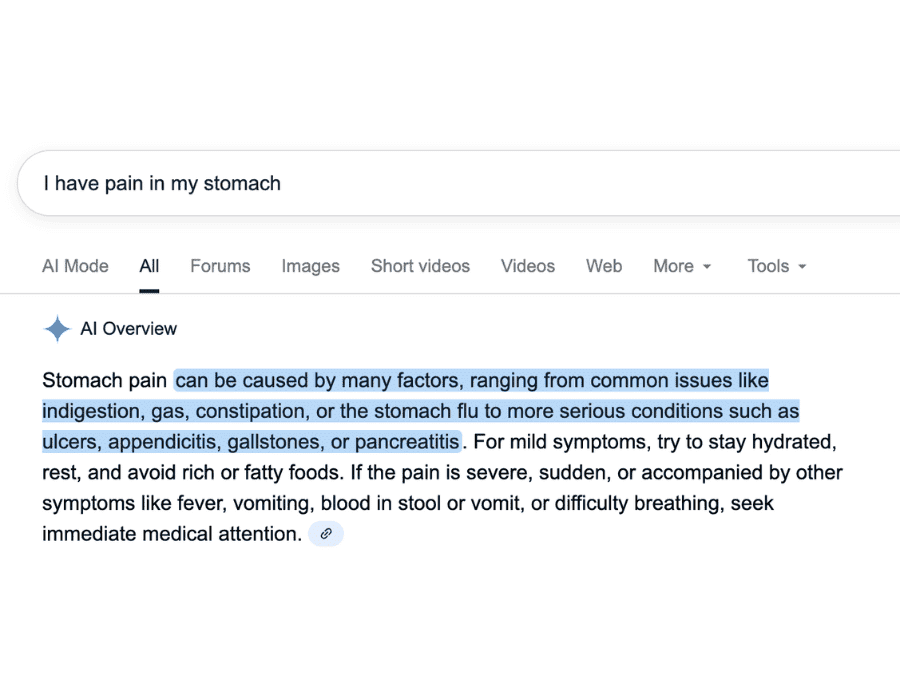
Googling symptoms can be helpful for broad information, but it comes with real risks:
- Information overload
- Results that prioritise clicks over accuracy
- Rare conditions appearing at the top
- No context — Google doesn’t know your age, history, or specific symptoms
- Self-diagnosis leading to unnecessary fear or false reassurance
A study by the National Library of Medicine found that people often misinterpret the medical information they find online, which can increase worry and lead to incorrect conclusions about their health.
Google is great for recipes and restaurant reviews.
For health?
It’s a mixed bag.
The Advantages of Using AI for Clearer Symptom Insights
AI symptom checkers offer a calmer, more personalised experience than wading through pages of search results.
Here’s why:
1. Personalised questions
The AI adapts to you. Google doesn’t.
2. Guidance that fits your situation
AI tools can help determine whether:
- You need a GP
- You can manage things with self-care
- Something requires urgent attention
A 2022 systematic review found that while diagnostic accuracy varies, AI symptom checkers often provide safe, reliable urgency advice, which is something Google is not designed to do.
3. Less panic, more clarity
No spiralling into worst-case scenarios.
4. Helps prepare for real appointments
AI helps organise your symptoms into a clear summary you can share with a doctor.
5. Can reduce unnecessary GP visits
Health technology research shows that symptom triage tools can help reduce avoidable appointments, easing pressure on the system.
AI doesn’t replace doctors.
But it does replace the panic that comes from Googling.
How the Air Doctor AI Symptom Checker Works
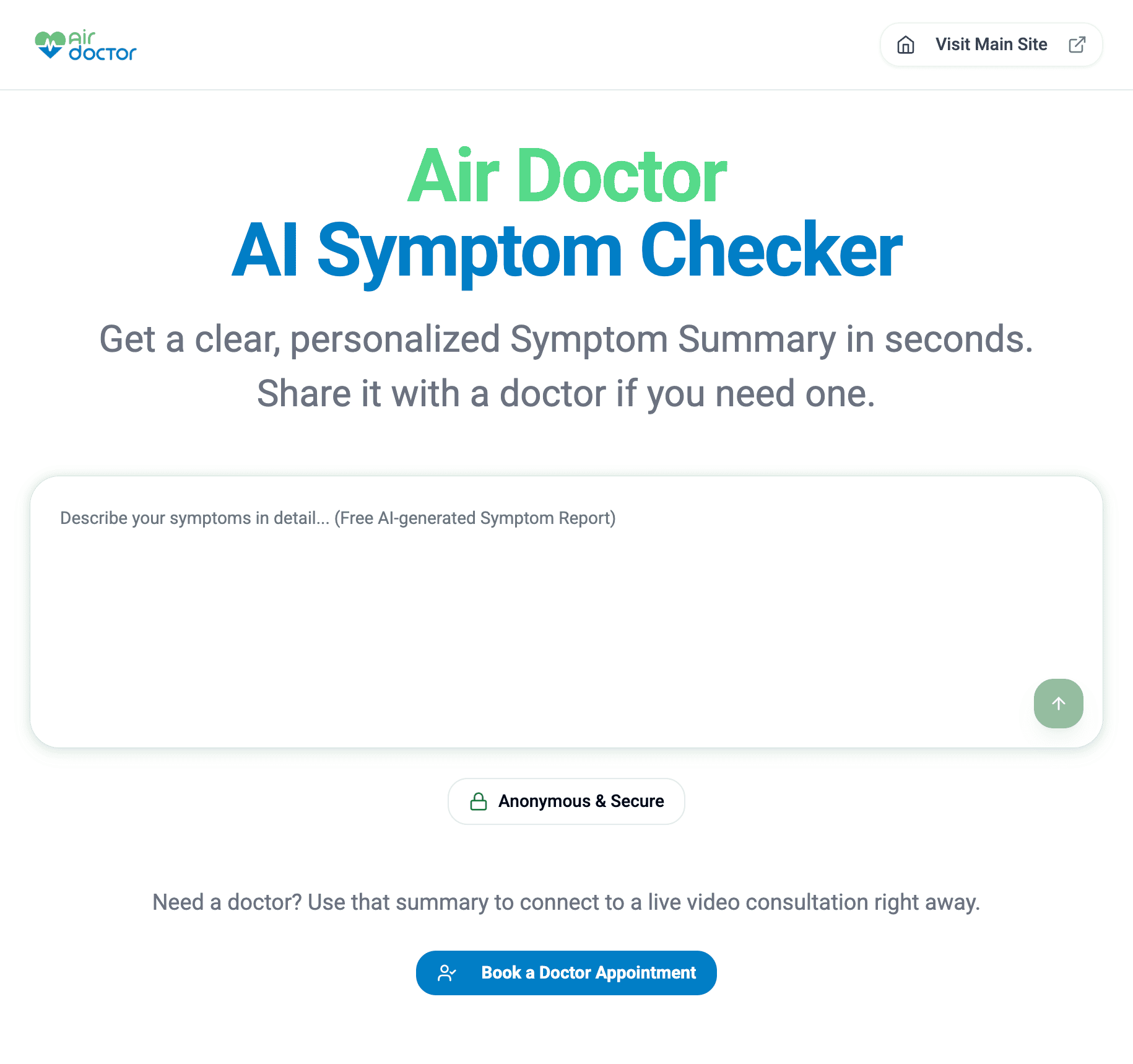
Air Doctor’s AI Symptom Checker is designed to give you fast, private clarity — without the noise and confusion of random Google results.
It uses a guided 8-step flow to build a full, accurate picture of what you’re experiencing.

This includes:
- Your main symptom
- How long it’s been happening
- Your medical background
- Any allergies
- Lifestyle factors
- How the issue affects your day
- What you’re hoping to understand
This structured approach helps the AI give clearer, more personalised insights — not just generic lists.
Once you’re done, the tool creates a simple, friendly summary of what your symptoms might mean and offers practical next steps. If the AI thinks you may need help from a professional, it connects you directly with vetted doctors who speak your language — online or in person.

It’s quick.
It’s calm.
It’s designed for real people, not medical experts.
When You Still Need Professional Medical Advice
AI is incredibly helpful for first-step clarity, but there are times when a real doctor is essential.
You should contact a professional if:
- Symptoms get worse
- Symptoms last longer than expected
- Something feels unusual for your body
- A child or older adult is ill
- There are any red-flag symptoms (chest pain, severe pain, breathing issues, etc.)
While AI tools are improving, they still can’t match the experience and intuition of a trained clinician, especially for complex conditions.
This is where Air Doctor stands out: if your symptoms need attention, the AI guides you to vetted doctors who speak your language — online or in person.
In Short
Googling your symptoms can leave you overwhelmed and stressed.
AI symptom checkers, on the other hand, offer a more personalised, calmer way to understand what might be going on — and what to do next.
They’re not a replacement for doctors.
But they’re a much better first step than spiralling through pages of worst-case scenarios.
If you want clarity, reassurance, and fast guidance (without the panic) the Air Doctor AI symptom checker is a great place to start.
FAQs
How accurate is Googling your symptoms?
Not very. Google shows the most clickable results, not the most accurate ones. Research also shows that searching symptoms online often leads people toward rare or serious conditions, even when their symptoms are mild. This can increase anxiety and cause confusion rather than clarity.
Are AI symptom checkers accurate?
They’re improving, but accuracy varies from tool to tool. Studies show that AI symptom checkers tend to be much better at triage (deciding how urgent a situation is) than at pinpointing exact conditions. They’re helpful for guidance and next steps — but they’re not perfect, and they shouldn’t be used for diagnosis.
Can AI symptom checkers replace doctors?
No. AI tools can help you understand what your symptoms might mean and whether you should seek care, but they can’t examine you, run tests, or make a clinical diagnosis. They’re best used as a first step — not a replacement for professional medical advice.